ADI AWARDS HOMEY PAPER CLAY
October 16, 2025
CERSAIE 2026: THE JOURNEY CONTINUES
October 1, 2026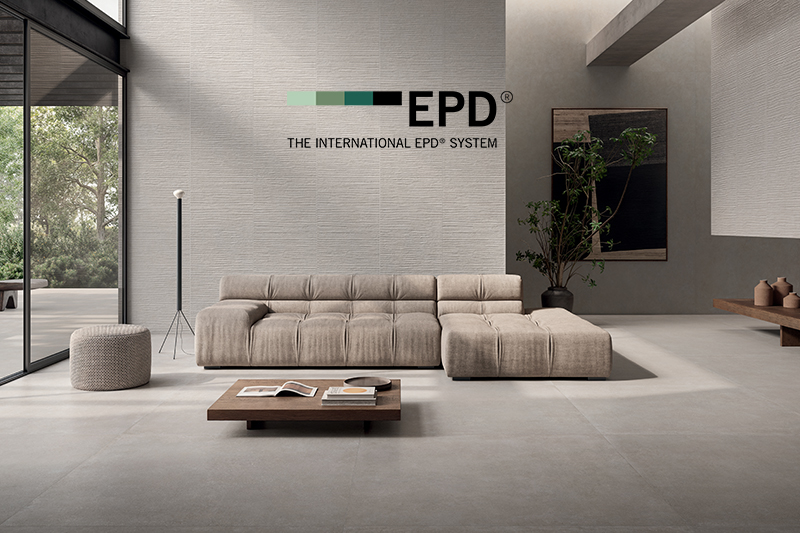
INNOVATION AND SUSTAINABILITY WITH EPD CERTIFICATION
Ceramiche Piemme has long combined Italian design flair with advanced, efficient production systems to create high-quality ceramic floor and wall coverings. To strengthen transparency and open new market opportunities in Italy and abroad, the company chose EPDItaly to certify its product range. CEO Sergio Bondavalli explains why the decision goes far beyond compliance.
What are the main motivations that pushed you toward voluntary EPD certification?
For us, the EPD is not just a document—it’s a statement of intent. It lets us communicate the environmental performance of our porcelain stoneware with verified, scientific accuracy. The LCA work behind it highlights the areas with the greatest impact—energy, raw materials, logistics—giving us a factual basis to improve processes, control costs and design ever-more sustainable products. It also supports compliance with Italian CAM criteria and makes it easier to take part in projects certified under schemes like LEED and BREEAM. In ESG-driven markets, that kind of transparency has already become a competitive must.
What product(s) in your company has/have obtained EPD? What are its main characteristics?
The EPD applies to all series and colors of 8.5–9.5 mm porcelain stoneware with water absorption below 0.5% (group BIA, dry-pressed tiles). They’re suitable for indoor and outdoor use—floors or walls—in residential, commercial and public spaces.
What are the main benefits gained from publishing the Environmental Product Declaration? What are the expected effects on the market?
The EPD positions Piemme among the suppliers chosen by public administrations embracing Green Procurement, showing our tangible contribution to sustainability and circularity. It also gives designers and customers comprehensive, comparable life-cycle data—so choices are guided by facts, not impressions. From a communication point of view, it’s a strong asset: a credible way to demonstrate our ongoing work on circular-economy principles, energy efficiency and carbon-footprint reduction.
Can EPDItaly help spread a stronger product-sustainability culture?
By acting as an independent and trusted reference point, EPDItaly drives a shift from generic green claims to verified, comparable information. That raises the overall standard of dialogue in the industry and encourages companies to compete on measurable environmental results.
How important, in your opinion, is the presence of sustainable products within a Program Operator (EPDItaly) that makes international networking one of its strengths?
It’s essential. Even though EU countries share common directives, national rules still vary—and Italy’s framework is among the most rigorous. Being represented within a Program Operator that’s internationally connected helps spread this culture of accountability and reinforces the reputation of Made in Italy worldwide.